Razors are simple objects with complicated personalities. If you have ever switched blade brands and wondered why your skin suddenly felt touchier, or why a favorite blade faded after three shaves in one handle but lasted a week in another, you have already discovered the truth: steel, geometry, coatings, and technique all matter. The details are not academic. They decide whether your safety razor gives you an effortless, glassy finish or a patchy shave that leaves you chasing stubble and dabbing alum.
The best way to make sense of the landscape is to understand what a razor blade actually is, how it is made sharp, how it is kept sharp, and why some combinations of blade and razor body work like magic while others fight you. Along the way we will pull examples from familiar tools, from a Merkur 34C with double edge razor blades to a Henson razor with a single blade razor design, and we will touch on straight razor and Shavette quirks for the brave. If you prefer a disposable razor, the principles here still help, because the hair and skin do not change just because the handle does.
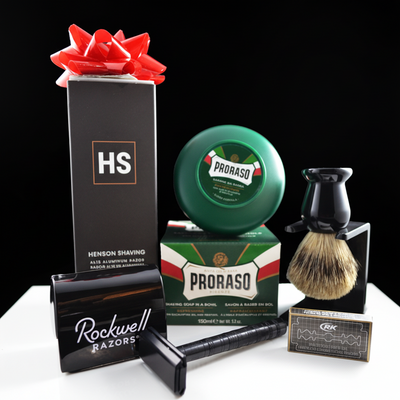
What sharpness really means on your face
Sharpness sounds simple until you try to define it. On a microscopic edge, sharpness is not just a thin tip. It is a specific apex geometry and finish that allows the blade to wedge through a hair shaft with minimal deflection. Hair is springy, roughly 50 to 100 microns in diameter for beards, and surprisingly hard on steel. When you pull a safety razor across hydrated stubble, the blade sees a series of tough fibers supported by a flexible surface. If the edge is too polished and too acute, it may feel incredibly keen yet harsh, especially on sensitive skin, because it bites hair and skin indiscriminately. If it is too toothy or the apex is rounded, it tugs and skips.
In use, sharpness is a balance between initial keenness and stability. A blade that feels politely sharp for four days can be more useful than a scalpel edge that drops off after one glorious shave. This is why people debate brands of double edge razor blades like they debate espresso grinders. You are balancing feel, speed, and consistency, not a lab number.
How modern DE blades are made sharp
Most double edge blades start as cold-rolled steel strip. The manufacturer stamps the familiar shape, then grinds the bevel in a multi-stage process. After heat treatment and tempering, the edge is finished with an abrasive progression down to very fine grit, then often receives a composite coating stack. Across brands you will see similar language with three variables that matter:
- Base steel composition, often a stainless grade with carbon around 0.6 to 0.75 percent and chromium above 12 percent. Grind geometry, both the bevel angle and the included angle at the apex. Coating stack, usually some combination of chromium or platinum for hardness and adhesion, and PTFE or similar for glide.
A tighter bevel angle increases cutting efficiency in the short term and fragility in the long term. A slightly blunter but more supported edge may feel less “zingy” on the first stroke yet hold up better through several shaves. The coating mediates how that bevel meets hair and skin on day one, and how it resists corrosion between shaves.
Coatings explained without the mystique
Coatings exist for three reasons. First, they protect the apex from corrosion. Beards carry salts and acids from sweat and sebum, and tap water leaves mineral films. Second, they adjust friction, which changes how the blade feels as it moves across the skin. Third, they stabilize the edge by distributing microstresses.
Chrome or platinum layers add hardness and act as diffusion barriers. They reduce microchipping at the apex and improve wear resistance. PTFE, commonly called Teflon, lowers the coefficient of friction significantly, which is why a fresh PTFE-coated blade often feels smooth, even if the underlying geometry is quite sharp. Some brands use diamond-like carbon or specialized fluoropolymers, each with a signature feel. Specialized stacks can create that sought-after combination of crisp cut and velvet glide that people describe when they find their favorite safety razor blades.
Coatings do wear. You can feel the difference on shave two or three when the extremely low-friction film thins. A blade that seems angelic on its first pass can turn assertive once the coating dulls, even if the metal edge is still healthy. On the other hand, a lightly coated blade that felt slightly grabby at first sometimes “settles in” by the second shave as residual machine oil and burrs clear. Either behavior is normal.
Steel, hardness, and the myth of a universal best
Good stainless is table stakes. Differences in hardness, usually in the mid to high 50s on Rockwell C, influence edge retention and brittleness. A harder blade resists rounding and keeps keenness, yet can chip microscopically if paired with a razor head that presents too much blade or with a coarse beard that loads the edge at oblique angles. A slightly softer blade can roll instead of chip, creating a duller but more comfortable feel as it ages, especially in mild razors.
There is no universal best. A blade that shines in a Henson shaving razor with tightly controlled clamping and low blade exposure might feel too tame in a mild vintage Tech, or too fragile in an aggressive open comb. The head design sets how the edge is supported and how much hair the blade sees per unit distance. Geometry governs behavior more than brand marketing.
Why your razor handle changes the equation
The razor’s head decides angle, exposure, and rigidity. Those three variables set how the blade’s micro-geometry meets macro reality.
The Merkur 34C is a classic example. It is a two-piece, relatively mild safety razor with modest blade exposure and a neutral to slightly positive blade angle. It clamps decently close to the edge but leaves enough projection that blade flex contributes to the feel. In a 34C, super keen blades can feel efficient yet forgiving, while rougher edges may telegraph chatter. Many shavers find mid-sharp, well-coated blades last longest in the 34C because the geometry preserves the apex and the coating keeps glide high as the blade ages.
The Henson razor approaches the problem from the opposite direction, with aerospace-tight tolerances and rigid clamping almost to the edge. Henson shaving models use very little blade exposure and a fixed angle that encourages a shallow approach. In that chassis, very sharp blades can feel remarkably gentle because the edge does not flex. Mid-sharp blades can feel almost too mild, particularly on dense whiskers. If you have read praise for Henson shaving Canada users getting a week from light beards, the stiffness is part of the reason.
Open combs and more assertive safety razors expose more of the blade and often present it at a higher effective angle. They cut decisively but ask more of the edge, especially across variable grain. If you use a razor marketed as aggressive, consider a blade with a robust coating and a geometry known for stability, not just a peak sharpness number.
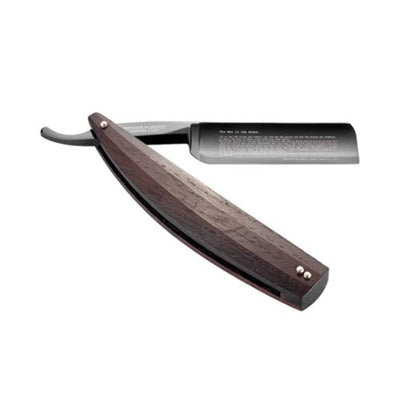
Straight razors and Shavette tools create a different set of trade-offs. A straight razor edge is bare steel, stropped and honed, without a PTFE crutch. The apex can be exquisitely fine yet depends on your maintenance ritual. A Shavette uses a half DE blade or a proprietary single blade razor, so you are back in the world of coatings and micro-geometry, just with more exposure and more opportunity to punish errors. Both reward clear feedback and consistent angle control. They also reveal the limits of your lather and prep instantly.
Prep, lather, and the blade’s apparent sharpness
You can increase or decrease the perceived sharpness of any blade by changing what you do before the first stroke. Hair hardness drops noticeably with hydration. A hot shower or three minutes with a warm, wet towel will give you a more accurate read on a new blade. Shaving soap matters as well. Tallow soaps, high-glycerin formulas, and some vegan bases provide thicker, more stable films that protect the skin and hold water against the hair. A good shaving brush helps you build and control that lather, especially when you vary water content to match the day’s humidity and your skin.
If a blade feels harsh on day one, two common culprits are poor hydration and too dry a lather, not an inherently bad edge. Add more water to the lather until it looks slightly glossy and forms low peaks, then test again. If glide is lacking, a soap with added slickness or a small pre-shave layer can help, though many pre-shaves mask poor technique more than they solve problems.
Technique that keeps edges alive
Edges die from three things: microchipping, corrosion, and rounding. You can slow all three with a few habits that do not cost anything.
- Rinse in warm water during the shave, but finish the blade with cool water, shake the razor dry, and leave it in a ventilated spot. Trapped moisture accelerates corrosion at the apex, even on stainless. Keep your angle consistent and light. A shallow angle, where the cap leads, reduces the forces that pry at the edge. Heavy pressure flexes the blade into the skin and flirts with chipping. Short strokes through dense areas reduce cumulative edge load compared to plowing long swaths. Let the blade cool and clear between strokes.
If you like to travel with a disposable razor, the same principles apply. Do not store it wet in a sealed kit. If you leave a razor in a humid bathroom next to cigar accessories in a leather case, expect the blade to degrade. Leather breathes but holds moisture. Steel remembers.
Matching blade personality to beard and skin
A coarse, fast-growing beard on resilient skin can take advantage of a sharper edge and a more assertive razor. You save time and reduce passes. A sensitive face with fine hair often prefers a smoother coating and a milder geometry, even at the cost of an extra clean-up. If your neck grows in six directions, prioritize control over raw efficiency. That might mean a Henson or similar rigid head paired with a mid-sharp blade and a wetter lather, or a Merkur 34C with a blade known to be smooth on day two through day five.
Straight razor users will often find that an edge finished on a natural stone gives a face-friendly softness at equal closeness, while a synthetic 12k finish feels keener but demands careful touch. With a Shavette that takes DE halves, choose a blade that behaves well in your safety razors. The transfer is not perfect, because exposure is higher, yet the family resemblance holds.
How many shaves should you expect
On average, a modern stainless double edge blade gives two to six comfortable shaves. Light beards with excellent prep can see a week. Coarse beards that chase BBS daily often change at three. Coating choice matters. PTFE-heavy stacks feel great out of the wrapper but can feel different by shave three as the lubricant layer thins. Platinum or chromium emphasis tends to keep the feel more consistent over the run, even if day one is less euphoric.

Water chemistry changes the math. Hard water leaves deposits that abrade the edge and roughen the glide. If your municipality runs very hard water and you notice blades fading early, either build lather with distilled water or add a small chelating boost via a soap formulated for hard water. Drying the blade thoroughly is more important in hard water zones.
Storage matters as much as the blade brand. Never wipe the edge laterally on a towel. If you must dry more aggressively, blot the cap and guard or dip the blade in high-proof alcohol to displace water, then air dry. Magnetic blade holders and stands for safety razors are fine, but avoid enclosed cabinets that trap steam.
Coating longevity and what to do when it fades
You cannot recoat a blade at home, but you can adapt. When a blade feels less smooth yet still cuts cleanly, adjust angle slightly shallower and increase hydration. If the first pass is fine and the second starts to tug across the chin or upper lip, flip the routine. Begin with the harder zones while the coating’s residual slickness is highest, then finish with the easy areas. Small changes keep a good blade working a little longer.
If the edge itself is going, not just the coating, retired uses abound: trim fabric pills, scrape labels, open packages, tidy caulk edges. Safety razor blades remain good tools when the face says no.
The role of the handle and weight
Weight changes the pressure https://holdenbrgg330.wpsuo.com/single-blade-razor-vs-multi-blade-which-gives-the-best-shave-1 conversation. A heavy handle encourages riders to let the mass do the work, which is helpful if you tend to push. The Merkur 34C strikes a balanced mass that many beginners appreciate. A lighter handle, like on some aluminum razors and certain Henson models, demands intent. You cannot coast on weight; you must manage angle. Counterintuitively, lighter razors often reduce irritation for people who struggle with pressure, because the tool refuses to bulldoze through angles that do not fit.
Texturing and length also matter. If your shaving soap leaves your fingers slick, a knurled handle prevents micro-slips that change angle mid-stroke. Decide based on your sink setup. Long handles help when you shave the head or legs. Short ones maneuver better under the nose and around a goatee.
Are single-edge blades better than double edge
Single-edge formats offer more spine stiffness, which can produce a calmer cut with a mild head design. Gem-style blades and modern single-edge designs often feel different rather than superior. They suit certain razors and preferences. A single blade razor in any format provides the essential feedback that cartridge stacks mute. That feedback, the sound and feel of hair parting, is how you learn to ride the cap, manage growth patterns, and avoid over-buffing. For many people, improved technique with a double edge razor matches the closeness of any single-edge system, with cheaper refills and ubiquitous availability.
Common missteps that shorten blade life
First, overcleaning. Alcohol dips are fine, but aggressive scrubbing wipes the apex. Second, poor lather discipline. Airy foam starves the blade of glide and water. Third, chasing perfect smoothness in one pass. Use a with-the-grain pass to map and reduce, then across the grain where safe. Against the grain should be earned by listening to the previous pass, not assumed. Fourth, storing a wet razor in a closed cabinet. And fifth, mixing blades and heads randomly without noting results. Keep a simple record of which blade works in which razor and how many shaves it delivers. Patterns emerge quickly.
A practical pairing guide for popular tools
If you are running a Merkur 34C, look for mid-sharp, smooth-feeling blades with solid coatings. The geometry rewards edges that hold stable keenness over several shaves. Test sharp-only exotics with care; they can be lovely but may not gain you much day-to-day.
If you use a Henson razor, especially the mild or medium variant, do not be afraid of sharper blades. The rigid clamping and guided angle keep them in line. For Henson shaving Canada customers who often report dry winters and sensitive skin, emphasize hydration and slick soaps. Sharp plus rigid plus wet equals drama-free efficiency.
In vintage or aggressive open combs, lean toward durable coatings. You want a blade that shrugs off micro-abuse from higher exposure. If your beard is wiry, start with short, methodical strokes and clear the head often.
For straight razor days, treat the blade as a living edge. Your strop, your stone, and your technique decide comfort far more than steel pedigree. If you pivot to a Shavette, pick blades you know well from your safety razors and shave with less pressure than you think you need, especially against the grain.
For the traveler with a disposable razor, upgrade everything around the blade. Use a compact shaving brush and a reliable shaving soap stick that lathers in hotel water. A good lather and light hand turn a basic edge razor into a capable tool for three or four days.
When to switch blades
Signals are consistent: tugging from the first stroke after proper prep, post-shave prickliness that was not there last week, or the need to apply pressure where none was necessary before. If your alum block sings where it used to whisper, the edge is dulling. Replace early rather than scraping your face for one more day. Blades are cheap compared to irritation.
If your routine includes a weekly lineup of razors, track the run time in that handle. A blade that gives five shaves in the 34C might give seven in the Henson, or only three in a more open razor. Do not chase equality across tools. Chase comfort and predictability.
Environmental and cost considerations
A sleeve of double edge razor blades costs a fraction of cartridge refills, and the steel is easily recyclable if your local facility accepts small sharp metals. Collect used blades in a dedicated tin or blade bank, not the trash. A pack of 100 blades can last a year or two for most people, even with generous replacement, and the steadiness of cost invites experimentation. Trying three or four brands is not indulgent. It is how you find the mix of sharpness, coating, and longevity that suits your hair, skin, and gear.
A high-quality safety razor lasts decades with minimal care. The Merkur 34C has been quietly doing its job in bathrooms for generations. Modern precision designs like the Henson show a different philosophy, focused on rigid control. Both have a place, and both make your blade choice meaningful.
A note on skin health and aftercare
The sharpest blade cannot save a poor finish. Rinse thoroughly, pat dry, and use an alcohol-free aftershave or a simple balm. Fragrance is fine if your skin tolerates it, but avoid heavy oils that trap heat. If you nick yourself, a touch of alum or a styptic pencil seals quickly. Chronic irritation is often angle-related, not blade-related. If problems persist with multiple blades, check your stroke angle. Cap-leading, shallow approach, and no pressure solves more issues than swapping brands.
A short, practical checklist
- Hydrate whiskers for at least two to three minutes and build a slick, well-hydrated lather with a shaving brush and reliable shaving soap. Start with a blade known to be smooth in your razor, then trial a sharper option once your angle is consistent. Rinse, shake, and air dry your razor; avoid enclosed, humid storage to protect coatings and the apex. Replace the blade at the first sign of persistent tugging or post-shave irritation that prep cannot fix. Keep simple notes for each razor and blade pairing, including shave count and feel, to find your personal best.
The joy of dialing it in
Few routines are as satisfying as a shave that disappears into your day, where the razor glides, the stubble falls, and your skin feels like itself. Getting there is less about chasing the sharpest badge and more about matching parts that play well together. Pick a solid safety razor, whether a workhorse like the Merkur 34C or a precise Henson model. Choose double edge razor blades whose coatings and geometry fit that head. Pay attention to water, lather, and angle. Respect the limits of your straight razor and Shavette if you walk that path. The system is simple once you understand what each piece contributes.
Sharpness gets you through the hair. Coatings let you do it comfortably. Longevity depends on how you treat the edge between and during shaves. With that frame, the noise drops away, and your daily Razor, in whatever form you prefer, becomes the reliable tool it was meant to be.